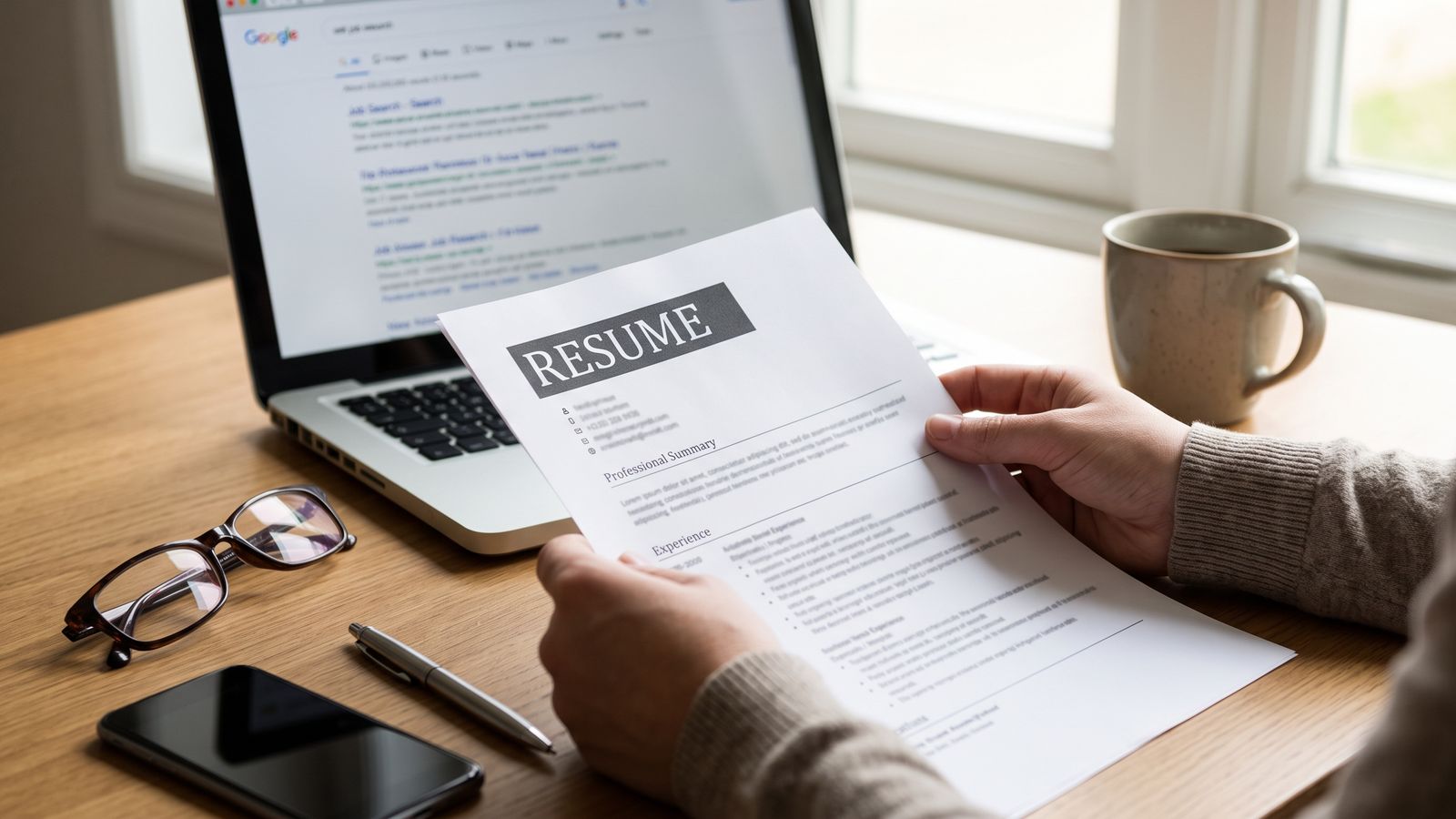
We should be quite frank: nowadays applying for a job resembles a tough video game where you try to overcome all the bosses that include applicant tracking systems. You may be an experienced player but if your resume format comes straight out of prehistoric times then your chances are zero. The whole game has changed significantly and if you fail to play according to the rules of 2026, you are pretty much sending your application to oblivion. Let’s talk about how you can do things right without giving up on the soul to the template.
The Machine and The Human
And here’s the truth you have to face immediately: you have two audiences to please in this game and their languages are different. The first one is some kind of software which uses AI to scan your resume looking for the right keywords. And the second one is a poor hiring manager who only tries to find out if you are a person and not some machine after all.
You cannot write for the one and not the other. Write for the machine and it will seem as if your resume was written by a computer when it had a nervous breakdown. Write for the human, and the program may never pass it along. This issue of having to consider both audiences at once is what the modern resume really comes down to, and to be honest, it is very tiring.
Enter Jobscan. They have established themselves through their approach, which views the resume as both a document for humans and machine-readable text. This approach is exactly what we should be taking in 2026. The trick is to find the right balance between the art and science of resumes.
Leveraging AI Without Losing Your Unique Voice
AI resume builders have become quite common. You give it your job title and it gives you generic text in return almost instantly. It is very tempting to simply copy and paste this output into your resume and move on with it. Don’t.
AI is an amazing place to begin, but it is a horrible way to end. It can give you your skeleton, but it will require you to add the muscle and the soul. The suggestion to utilize AI to draft and retain your personal specificity is pure gold. Utilize the technology to spit out the mundane parts such as action verbs or industry jargon, but follow up immediately with your own voice.
Utilize AI to assist you in structuring your experiences, but it has no clue about the time you helped your company save $50k through renegotiation of a vendor agreement. It has no idea about your unique victories. These need to be included in your prompt for a useful draft, which still requires significant editing.
The Anatomy of a 2026 Resume
And now, what does this document really look like? It begins with the basics, but the basics have changed. You do not have an "Objective Statement" anymore. You have to get rid of this thing right now. Instead, you will write a dynamic professional summary that makes you scream with your value.
Your summary has to be maximum three to four sentences long. It has to have your years of experience, your main industry, and your main value proposition. No ambiguity here. Specifics will win you the game every single time. Instead of saying "a hard worker who wants a challenge," say "Data Analyst with 8 years of experience growing company revenue."
The second section is your work experience. And this is where most people make a huge mistake. They describe their responsibilities, not accomplishments. Nobody cares about you "managing a team." They want to know that you "have led a cross-functional team of 12 members, delivering Project X three weeks ahead of schedule."
Everything needs to be quantifiable. Numbers are the universal language of business. If you can put a percentage, an amount of money, or a timeframe on your bullets, then go ahead. The ATS likes numbers, as they are concrete facts. Humans like numbers too because that means you really did something.
Proper Formatting for Survival
Here's where we move on to the technical part. It doesn't matter how amazing your content is if the formatting is funky. Keep it neat, keep it standard. Do not go off-script and use columns and text boxes unless you are sure the ATS can read them.
Stick with standard headers like "Work Experience," "Education," and "Skills." Don't go all funky with something like "My Superpowers" when it comes to the skills header. The ATS has keywords it is looking for, and it isn't programmed to appreciate your creative personality.
Fonts are also important to pay attention to. Opt for tried and true fonts such as Arial, Calibri, or Helvetica. They are professional, easy-to-read, and work on any device. Do not use your favorite fancy serif fonts – save them for your blog.
The Keyword Strategy
This is the magic ingredient that companies like Jobscan highlight. You have to mimic the words used in the job listing. If the job listing requests someone with experience in “project management,” do not mention “project oversight” in your resume.
It is not about sprinkling the words across the page or in the margin areas. It is an outdated trick, and the AI knows how to spot it. You have to insert the keywords organically into your bullet points. If the job listing uses “Agile methodology” three times, your resume has to show you actually used it at work.
Make your skills section readable and easily scanable. List your technical skills, software proficiency, and any certifications. This is an easy victory for the applicant tracking system as it can mark off your skills straight away. Just make sure you actually have these skills as the interview will reveal any lies immediately.
Human Touch
Once you have made your document readable by the machine, take a step back and look at it from a human perspective. Does it flow? Does it make sense? Does it reflect you? If it sounds like the dictionary had exploded onto the paper, then it is time to simplify it.
The resume is a marketing tool and must reflect your journey of achievements. It must compel the reader to initiate a conversation with you. If all you are doing is stuffing your resume with key words, you may be invited for an interview, but you won’t be able to justify yourself.
One of the things we can observe regarding trends in 2026 is that personality is making its way back into resumes. The employers get tired of robotic CVs. Add some color to your summary or list a unique hobby at the end and be remembered. Just remember that there is only a very thin line between being remembered and becoming unprofessional.
Final Thoughts on the Process
Creating a resume is not a one-off experience. It is a dynamic process that involves regular adjustments. Every single time you apply for a position, you need to tweak your resume so that it could fit the specific job you are applying for. Generic resumes result in generic outcomes.
It takes time and it is quite boring. I understand it. However, the outcome is worth it all. The moment when you get the e-mail saying that you got invited for an interview becomes priceless and makes all the time you have spent on polishing your bullet points irrelevant. You are crafting the key to your future professional success.
So, utilize the technology, but don’t allow it to take away your humanity. Employ the technology to bypass the gatekeeper but employ your personal charm to convince the group. This is the secret of success in 2026. All the best in your endeavors, you will definitely need it.